


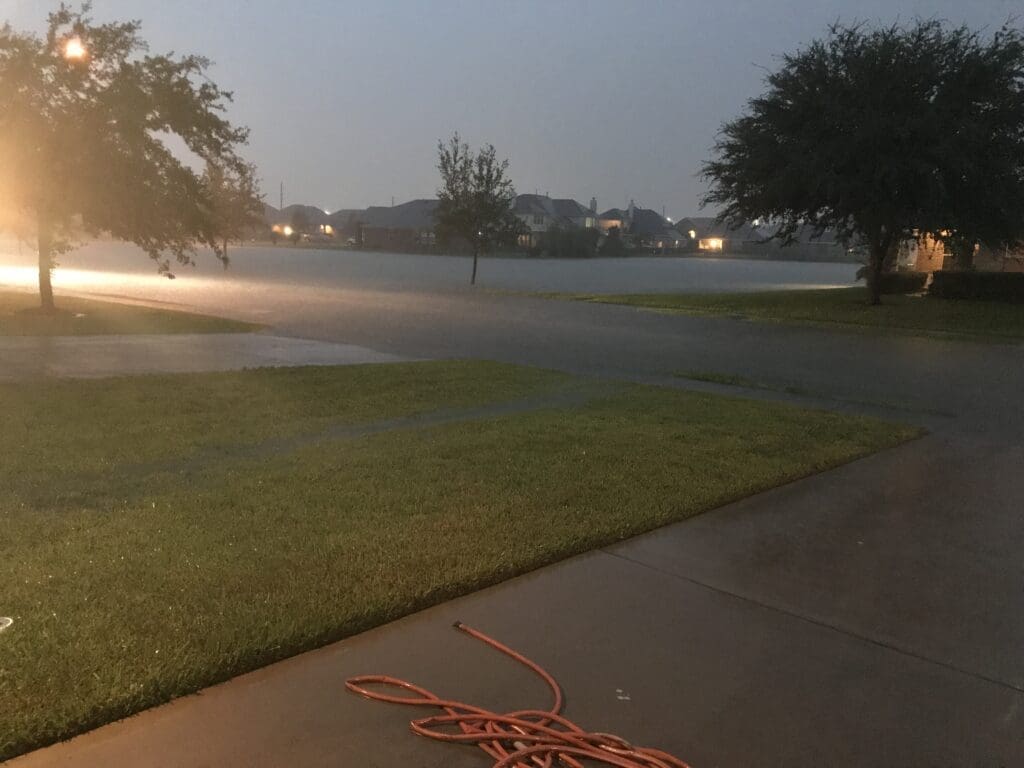
June 1st is not just a date on the calendar. It is the beginning of a season you need to be ready for.
Let me tell you something about Hurricane Ike.
It was 2008. I had not been in Houston that long and I was still learning how this city worked — including how it handled hurricanes. What I remember most is the uncertainty right up until the last minute. Was it coming here? Was it turning? Was it as bad as they were saying? My job did not give us time to prepare properly. And then it hit.
The worst part for me was not the storm itself. It was the days after. No electricity. Flooding everywhere. The city feeling like it had been put on pause with no clear end date. That experience taught me more about Houston hurricane season than any preparedness guide ever could.
I have been through three hurricanes in twenty years in this city — Ike, Harvey, and Beryl. Each one different. Each one a reminder that living on the Gulf Coast is a trade-off you make consciously or you make it by accident. Either way you are making it.
If you are moving to Houston or Katy — this post is the thing I wish someone had handed me when I first got here.
Want the full picture of life in Houston first? Read the good stuff here. Read the bad stuff here.
First — What Hurricane Season Actually Means in Houston
Hurricane season runs June 1st through November 30th every single year. That is six months of your life in Houston where the Gulf of Mexico has an opinion about your plans.
Not every year brings a major storm to Houston. Most years the storms that form weaken, shift, or make landfall somewhere else along the Gulf Coast. Late season storms in October and November happen but are less common. The peak of the season is August through October when Gulf water temperatures are warmest and storms intensify fastest.
But NOAA is predicting an above-normal 2026 season with 13 to 19 named storms, 6 to 10 hurricanes, and 3 to 5 major hurricanes. And the thing about Houston specifically is the geography — a serious storm does not always announce itself days in advance. Hurricane Beryl gave Houstonians barely 48 hours of warning in July 2024 before knocking out power for more than 2.7 million customers.
48 hours. That is not a lot of time to figure out what you are doing if you have never done this before.
What I Have Learned From Three Hurricanes
Hurricane Ike — 2008
The uncertainty was the hardest part. You watch the models, you watch the news, you try to figure out if this is the one you need to take seriously. My job did not give us time to prepare and we paid for it. Days without power in Houston heat is not a minor inconvenience — it is a real hardship especially with kids, elderly family members, or anyone with medical needs.
Ike taught me — take every storm seriously until you have a reason not to.
Hurricane Harvey — 2017
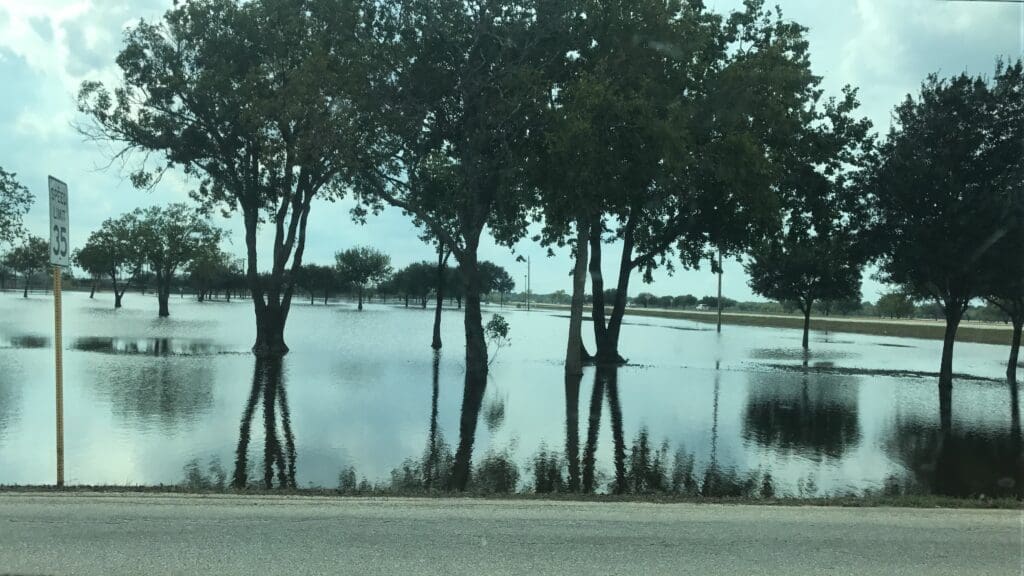
Harvey was different. Harvey was not wind — it was water. It stalled over Houston and rained for days. Houston experienced five 500-year flood events in less than a decade and Harvey was the worst of them. Neighborhoods that had never flooded before were underwater. People were rescued from rooftops. The scale of it was unlike anything most Houston residents had ever seen.
Harvey taught me — your flood zone designation on paper does not always tell the real story. Zone X low-risk properties flooded catastrophically when the Army Corps of Engineers released the Addicks and Barker Reservoirs. Nobody in those neighborhoods expected to flood. They did anyway.
Hurricane Beryl — 2024
Beryl moved fast. Faster than most people expected. It knocked out power for more than 2.7 million Houston customers. The biggest problem from Beryl — like the derecho that hit Houston just weeks before it — was the extended power outages. Not the wind. Not the flooding. The heat and the darkness after.
Beryl taught me — the storm passing is not the end. What comes after can be just as hard.
What You Need to Do Before June 1st — Every Year
This is not a one time checklist. This is an annual ritual for every Houston homeowner. Do it before the season starts. Do not wait until a storm is named and headed your way.
Get your roof inspected. Before every hurricane season have your roof looked at. Know its condition. Know what your homeowner’s insurance covers for wind damage. Houston homeowner’s policies often have a separate hurricane deductible that is higher than your standard deductible — know that number before you need it.
Buy flood insurance now — not when a storm is coming. This is the one that catches new Houston residents completely off guard. The 30-day NFIP waiting period means you cannot buy flood insurance once a storm is approaching. You have to have it in place before the season starts. And your standard homeowner’s policy does not cover flooding. Those are two completely separate policies.
Call your insurance agent this week. Ask specifically about flood insurance and ask what your hurricane deductible is. Do not assume. Confirm.
Know your flood zone — and then verify it. Go to msc.fema.gov and enter your address. Find out what flood zone you are in. But remember Harvey’s lesson — the flood zone map is a starting point not a guarantee. Ask your real estate agent about the history of flooding in any neighborhood you are considering. Ask about the elevation certificate. Ask about the Addicks and Barker Reservoir drainage areas if you are in west Houston or Katy. These are not paranoid questions. They are smart ones.
Secure your outdoor furniture. Before any storm warning — bring in or tie down anything in your yard that is not bolted down. Outdoor furniture, grills, potted plants, decorations. In high winds these become projectiles. This is not optional.
Know your evacuation zone. Harris County uses zones A through F for evacuation orders. Zone A is the highest risk — storm surge areas and lowest elevations — and evacuates first when ordered. Know which zone your home is in before a storm is ever named. You do not want to be figuring that out with 48 hours notice.
The Hurricane Kit — What You Actually Need
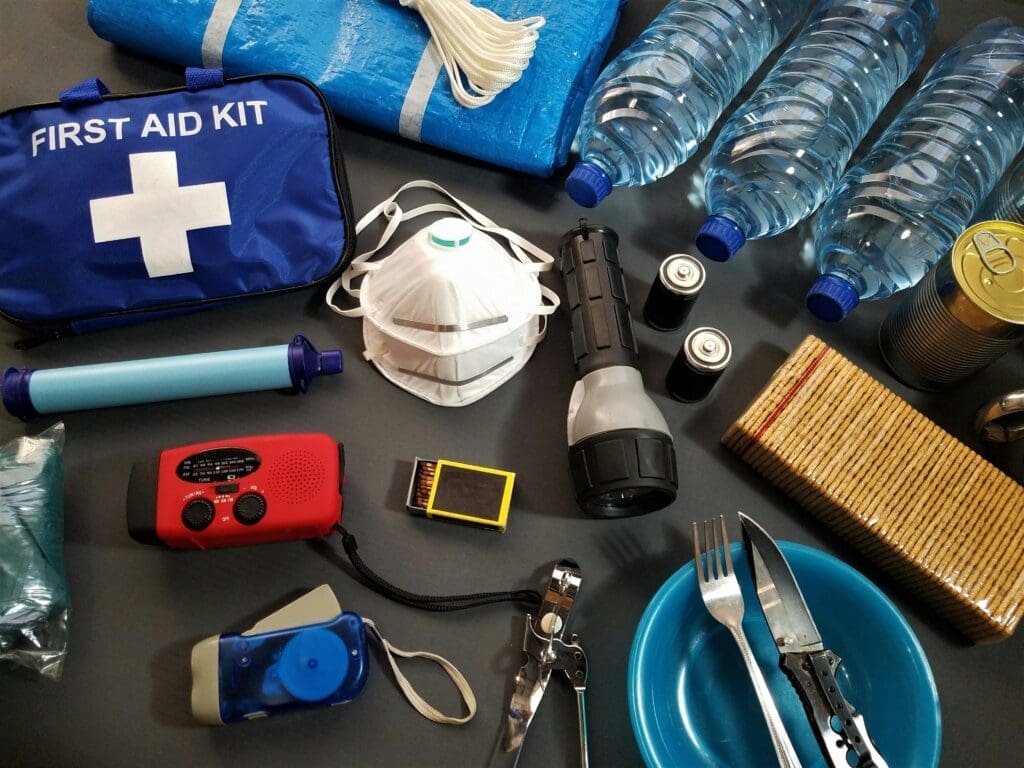
Generic preparedness lists exist everywhere. Here is the Houston version based on what people actually needed after Ike, Harvey, and Beryl.
Water — one gallon per person per day for at least seven to ten days. Not three days. Seven to ten. Houston power outages after storms have lasted that long and longer.
Food — non-perishable items you will actually eat. And listen — if a storm is coming and you have steaks in the freezer that are about to thaw anyway you fire up the grill. That is Houston. Every neighbor on the street comes out. You eat well the first night. After that it is sandwiches, snacks, and whatever you stocked up on before the storm hit.
A generator — this is not optional in Houston. The heat after a storm with no power is dangerous. A portable generator for window AC units, fans, and keeping your refrigerator running is worth every penny. Buy it before June. They sell out fast once a storm is named.
Battery powered fans and a car charger — for when the generator needs a break or you cannot get more gas.
Flashlights and batteries — one per person minimum.
Important documents in a waterproof bag — passports, birth certificates, insurance policies, closing documents. Know where they are before a storm hits.
A full tank of gas — always. During hurricane season keep your tank above half. Gas stations run out and lines get long fast.
Cash — ATMs go down when power goes out. Have cash on hand.
Do a video home inventory — walk through every room with your phone, opening cabinets and closets, narrating what you own. Store the video in cloud storage outside your home. If you ever have to file an insurance claim after a storm you will be grateful you did this. It costs nothing and takes thirty minutes.
After the Storm — What Nobody Tells You
The storm passes. The sun comes out. And Houston gets to work.
But before you go outside and start assessing damage there are things you need to know.
Do not walk or drive through standing floodwater. Ever. This cannot be said enough. You cannot see what is under that water. You cannot judge the depth. And in Houston after a storm that water can contain things that will genuinely ruin your day or your life.
Snakes. Alligators. Downed power lines hidden under the surface. Raw sewage. Debris. All of it is real and all of it has been found in Houston floodwater after major storms. I am not trying to scare you — I am trying to make sure you treat that water with the respect it deserves.
Wait for the water to recede. Let the professionals assess downed power lines before you go near them. And if you see wildlife in an unexpected place after a storm — give it a wide berth and call animal control.
The community that shows up after a Houston storm is one of the most remarkable things I have witnessed in twenty years here. Neighbors helping neighbors clear debris. People sharing generators and food and phone chargers. Strangers pulling strangers out of flooded cars. That spirit is real and it is one of the things that makes Houston worth staying for through all of it.
What to Look For as a Buyer
If you are still in the process of choosing where to live in the Houston area — here is what I look at for every client when it comes to storm and flood risk.
Elevation matters more than flood zone designation. A home that sits higher has a natural advantage regardless of what the map says.
Distance from bayous and retention ponds matters. Beautiful waterfront views come with flood risk. Know what you are choosing.
The Addicks and Barker Reservoir drainage areas in west Houston and Katy were dramatically affected by Harvey. If you are buying in that corridor — ask specifically about the home’s history and the reservoir releases. Your agent should know this conversation.
MUD districts — Municipal Utility Districts — handle drainage in many newer Katy and Fulshear developments. Some are better funded and better maintained than others. Ask.
And ask about the home’s history. Has it ever flooded? Even a small amount? Sellers in Texas are required to disclose known flooding. Ask the question directly and make sure the answer is in writing.
If you want someone to walk you through these questions before you make an offer — reach out before you buy. This is exactly the kind of conversation I have with every relocating family.
One More Thing Every Buyer Needs to Know — And Most Agents Never Say It
If you are purchasing a home during hurricane season — and hurricane season is six months long — there is a hard stop that can derail your closing that nobody warns you about until it is too late.
If a named storm enters the Gulf of Mexico insurance companies will not write new homeowner’s policies. Full stop. They go into what is called a binding moratorium. No new policies. No exceptions. No timeline on when it lifts.
What that means for your closing is simple — if a storm is named and tracking toward the Gulf while you are under contract your closing could be delayed indefinitely. You cannot close without a homeowner’s insurance policy in place. And if the underwriter will not write it you are not closing.
This is not a rare scenario. Hurricane season runs June through November. That is half the year. If you are relocating to Houston and planning to close on a home anytime in that window — and most relocating families are because summer is the peak moving season — you need to know this conversation exists.
Here is what I tell every buyer I work with during hurricane season. Watch the Gulf. Stay in communication with your insurance agent throughout the process. And make sure your contract has enough flexibility to account for weather related delays. A good agent builds this into the conversation from day one — not when a storm is already named and everyone is panicking.
This is not a reason to avoid buying during hurricane season. Thousands of people close on homes successfully every summer in Houston. It is just a reason to go in informed and work with someone who knows to have this conversation before it becomes a problem.
A Note That Has Nothing to Do With Hurricanes Specifically
This applies to fires, floods, tornadoes, and every other thing life can throw at a home.
Your family photos are irreplaceable. Everything else in your house can be rebuilt, replaced, or claimed on insurance. The photo of your grandmother, your child’s first birthday, the moments that exist nowhere else in the world — those you cannot get back.
Scan them. Upload them to Google Photos, iCloud, anywhere that lives outside the four walls of your home. A waterproof container for the physical prints you cannot part with. A safe deposit box for the documents that matter most.
This is not a hurricane season task. This is a this weekend task. Do it once and it is done. The peace of mind is worth every minute it takes.
I have watched people lose everything in a flood. The thing they grieve longest is never the furniture. It is always the photos.
The Bottom Line
Hurricane season is real. It is six months long. It has knocked out power to millions of people with less than 48 hours notice. It has flooded neighborhoods that were not supposed to flood.
And Houston is still one of the best cities in the country to build a life in.
Those two things are both true at the same time. You just need to walk in prepared.
June 1st is almost here. Use the time you have right now to get your insurance right, build your kit, and know your zone. Do not wait until a storm has a name.
Want the full picture of life in Houston? Read the good stuff here. Read the bad stuff here. The ugly is coming soon. [FUTURE LINK: Moving to Katy TX — The Ugly — activate when published]
Crystal Plummer Spruill is a licensed real estate agent serving Katy, Richmond, Fulshear, Sugar Land, and the greater Houston TX area. Brokered by Real Broker LLC. TREC #0688471. She has lived in Houston for twenty years and has been through Hurricanes Ike, Harvey, and Beryl. Ready to find the right home in the right neighborhood?

POST COMMENTS//WILL BE HERE