


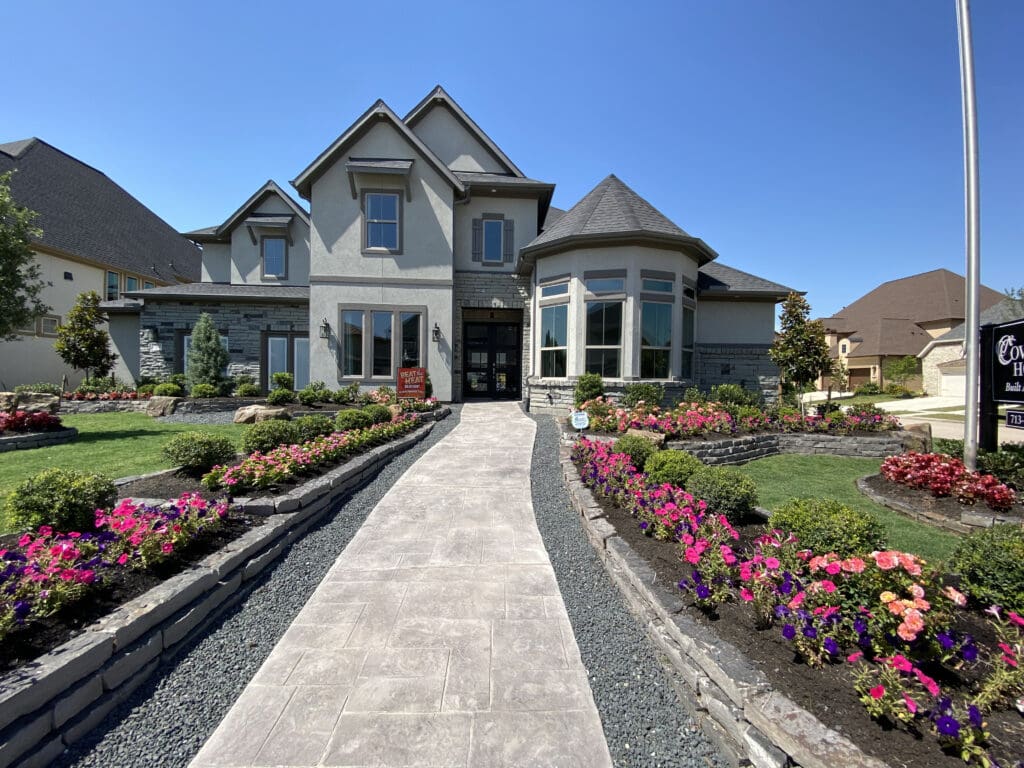
Before you search a single listing — read this first.
Houston Market Data — May 2026
I want to tell you three things that surprised me about Houston housing that nobody told me before I got here.
The first one happened early. I was driving down a major street — same name, same road — and within a few blocks the whole energy changed. Back home you knew where things were. The neighborhoods had clear identities and clear boundaries. Houston does not work that way. No zoning means one apartment complex on one end of a street can have a completely different experience than another one a half mile down with the same address. Same street name. Completely different reality. I had to learn to read Houston block by block — not by street name, not by zip code, not by what the listing description said.
The second one hit me when I became a homeowner. I did my research. I knew the school district. I bought in the right area for the right schools. And then the rezoning happened. My child’s school assignment changed. And I found out — the hard way — that your neighbor directly across the street might not be zoned to the same school as your child even though you share a sidewalk and a community entrance. That is Houston school zoning reality and it catches relocating families off guard constantly.
The third one came when I started working in real estate and really understanding how master planned communities are built here. A beautiful community — amenities, walking trails, resort style pool, the whole picture — can sit across two different cities and two different counties. Texas Grand Ranch for example spans two different jurisdictions. What that means for your taxes, your services, your school district — it is not the same on both sides. The community looks unified. The legal and financial reality is not always.
I am telling you these three things before we get into the full picture of Houston housing because they are the frame everything else lives inside. Houston housing is not what you are used to. It is its own category. And the more you understand that before you start searching — the better decision you are going to make.
So let us get into it.
This is part of the Houston Housing 101 series. You might also want to read: Moving to Katy TX — The Good, Moving to Katy TX — The Bad, Moving to Katy TX — The Ugly, Moving to Houston During Hurricane Season
Master Planned Communities — The Houston Specialty
If you are moving to the Katy, Fulshear, Sugar Land, Cypress, or The Woodlands area — master planned communities are going to be a significant part of your search. Houston does master planned communities better than almost anywhere else in the country and the data backs that up.
The Houston metro area consistently contributes nearly 20 percent of all sales among the nation’s top 50 master planned communities. Houston leads the nation in this category and it is not close.
Here is what a master planned community actually means. A developer purchases a large tract of land — sometimes thousands of acres — and builds an entire self-contained community from the ground up. Roads, parks, trails, pools, amenity centers, retail, sometimes schools — all planned and built together. The homes inside are built by multiple builders the developer has approved for that community. You are not just buying a house. You are buying into a lifestyle infrastructure that was designed before the first foundation was poured.
The major developers you will see repeatedly:
Johnson Development is one of the most established and respected master planned community developers in Houston. Founded in 1975 and based right here in Houston they have built some of the most recognizable communities in the area. Their portfolio includes Sienna in Missouri City, Cross Creek Ranch in Fulshear, Woodforest in Montgomery, Harvest Green in Richmond, Jordan Ranch in Fulshear, and Jubilee in Hockley. Johnson Development recently broke ground on The George — a 1,500 acre master planned community on land acquired from The George Foundation, the overseer of the historic 20,000 acre George Ranch in Fort Bend County.
Howard Hughes Communities is the developer behind Bridgeland in Cypress — one of the most significant master planned communities in the Houston area right now. More on Bridgeland below.
Land Tejas is another major Houston developer with communities including Balmoral in the West Lake Houston area — home to one of the first Crystal Lagoons in Texas — and Grand Magnolia in Magnolia with another Crystal Lagoon amenity coming.
Perry Homes, Lennar, DR Horton, Taylor Morrison, and David Weekley are among the major builders you will see inside these communities. The developer controls the land. The builders construct the homes. Knowing both matters when you are evaluating a community.
These are examples. There are many more developers and communities across the Houston area than what is listed here. [LINK: moraeagroup.com/where-do-i-start — hyperlink on “reach out and we can talk through which communities match what you are looking for”] Reach out and we can talk through which communities match what you are looking for.
The Crystal Lagoon Communities — What They Are and What to Know
You are going to see Crystal Lagoon as an amenity marketed heavily in Houston area communities and it will catch your eye. It should. They are genuinely impressive.
A Crystal Lagoon is a massive man-made body of crystal clear water — think turquoise beach water, white sand beaches, cabanas, water sports, the whole resort experience — inside a residential community. Sunterra in Katy features a 2.7 acre white sand beach with a crystal lagoon. The community sits on 2,300 acres and includes a pool, lazy river, splash pad, and walking trails — all within Katy ISD and parts of Royal ISD.
Other Crystal Lagoon communities in the Houston area include Balmoral in Humble, Lago Mar near Texas City, and Grand Magnolia coming in Magnolia.
Here is what I want you to know before you fall in love with the amenity.
The Crystal Lagoon is beautiful. It is also a selling tool. Here is what to ask before you buy in one of these communities — what are the HOA fees and what do they cover. Crystal Lagoon maintenance is not cheap and someone is paying for it. Monthly HOA fees in Crystal Lagoon communities can run significantly higher than in communities without resort style amenities. Know the number before you commit to the mortgage.
Also ask — is the lagoon resident only or is access sold to non-residents. Some communities have opened lagoon access to outside memberships to offset maintenance costs. That changes the experience significantly.
The Housing Types — What Is Actually Available
Houston housing is not one thing. Here is the full menu.
Single Family Homes The dominant housing type in Katy, Fulshear, Sugar Land, Cypress, and the suburbs. These range from starter homes in the $250s to custom builds well into the millions. Houston suburban single family homes are generally larger for the price than almost any comparable major metro in the country. You get more square footage here.
A few things specific to Houston single family homes that you need to know — and we are going to go deeper on all of these in the Houston Housing 101 series:
No basements. Houston sits on clay soil with a high water table. Basements are not a thing here. What you get instead is covered in the next post.
One bedroom down is standard in many Houston builds especially anything built before the last few years. If you need a first floor bedroom for aging parents, accessibility, or just preference — look for it specifically. Do not assume.
Foundation issues on clay soil are real and specific to this region. We cover that in full detail later in this series. [FUTURE LINK: Houston Foundation Issues — activate when published]
Townhomes Townhomes in Houston — especially inside the loop and in inner ring suburbs — are typically narrow, multi-story, and all bedrooms up. Three and four story townhomes are common in Houston’s urban core. If you are coming from a single story home or have mobility considerations this matters. Townhomes in the suburbs tend to be more traditional in layout.
Condos Available primarily in the inner loop, Galleria area, and Medical Center corridor. Less common in Katy and the far suburbs. If you want walkability, urban amenities, and a lower maintenance lifestyle — condos exist here. Just not everywhere.
Patio Homes A Houston specific housing type worth knowing. Smaller single family homes on smaller lots — often in gated communities — designed for low maintenance living. Popular with empty nesters, lock and leave buyers, and people who want the single family feel without the yard work.
New Construction Houston builds more new homes than almost any other city in the country. In 2024 Houston led the nation in single family home building with over 50,000 building permits — well ahead of Dallas and Phoenix. New construction is everywhere in the suburbs and it comes with builder incentives, warranties, and the ability to customize finishes. It also comes with things nobody tells you before you tour the model home. We cover that in full in this series. [FUTURE LINK: New Construction vs Resale in Houston — activate when published]
Waterfront and Golf Course Communities Both exist in abundance in the Houston area. Waterfront lots along lakes and retention ponds are available throughout the suburbs — particularly in The Woodlands, Lake Conroe, and communities along Buffalo Bayou. Golf course communities are concentrated in Sugar Land, The Woodlands, Katy, and Friendswood.
What to know about waterfront in Houston specifically — proximity to water is beautiful and it comes with flood zone considerations that matter significantly in this market. We cover that in detail in the flooding and elevation post. [FUTURE LINK: Flooding and Elevation in Houston — activate when published]
Luxury and Custom Homes River Oaks, Memorial, The Woodlands, and Sugar Land’s Greatwood area are among the luxury corridors. Custom builds are available throughout the market at a range of price points. Houston’s luxury market has shown resilience even during market downturns — median sale prices in certain luxury zip codes increased from approximately $1.8 million in 2024 to $2.1 million in 2025 despite broader market softening.
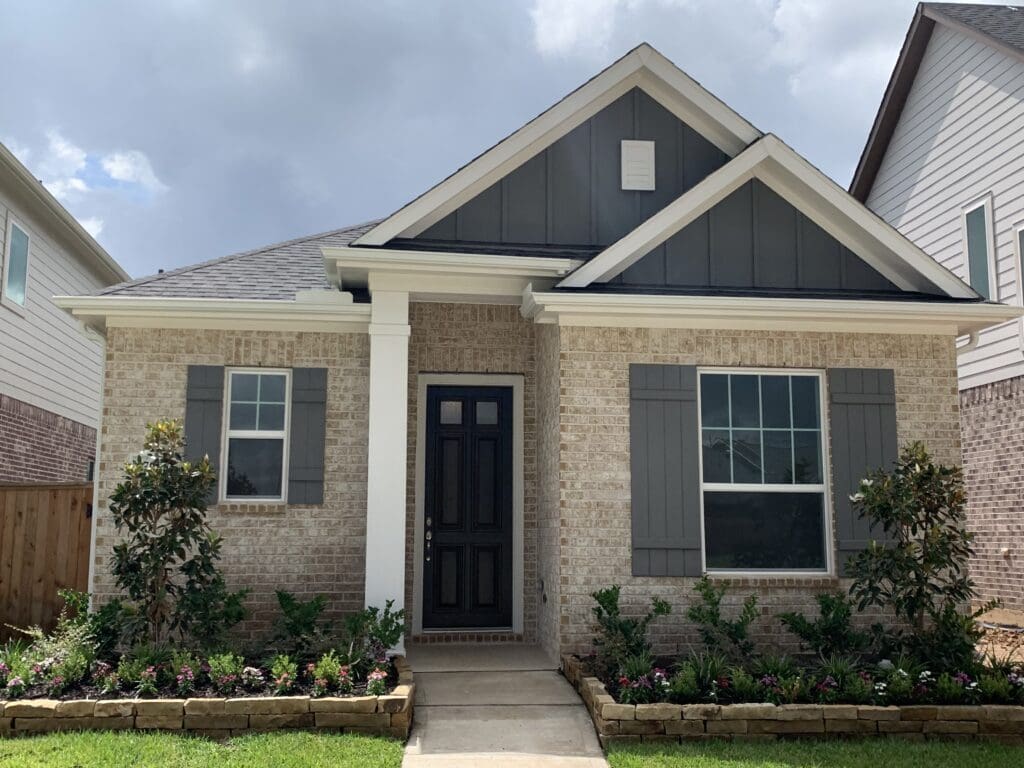
The Architectural Styles — What You Will Actually See
Houston does not have one dominant architectural style the way some cities do. Here is what you will encounter most often.
Traditional / Brick The dominant style in established Katy, Sugar Land, and inner ring suburbs. Brick exterior, pitched roof, two story, relatively traditional layout. This is the most common Houston suburban home and it holds value well.
Mediterranean / Stucco Popular in higher end communities and certain corridors — particularly Sugar Land, parts of Katy, and inner loop neighborhoods. Stucco exterior, arched details, tile roof. Beautiful aesthetic. Also comes with specific maintenance considerations in Houston’s humid climate that every buyer should understand before purchasing. We cover stucco and mold in full detail in this series. [FUTURE LINK: Stucco and Mold in Houston — activate when published]
Modern / Contemporary Growing in popularity especially in new construction and inner loop infill development. Clean lines, flat or low-pitched roofs, large windows, open floor plans. Available throughout the market but concentrated in EaDo, Montrose, The Heights, and newer master planned communities.
Farmhouse Board and batten, metal roofs, open kitchens. Available in newer construction throughout the suburbs. Very popular with relocating families.
Craftsman Less common than in other markets but available in certain neighborhoods and custom builds. More prevalent in older established neighborhoods than in new construction master planned communities.
The HOA Reality — Almost Everything Has One
Before you go further into specific communities there is one thing you need to understand about Houston suburban housing that will save you from being blindsided at closing.
Almost everything in Katy, Fulshear, Sugar Land, Cypress, The Woodlands, and the surrounding suburbs has a Homeowners Association. This is not optional and it is not negotiable. The HOA exists before you arrive and it will exist after you leave.
There are pockets — older neighborhoods, certain areas inside the loop, some smaller subdivisions — where HOAs do not exist or are minimal. But if you are moving to a master planned community or a newer suburban development in Houston’s growth corridors budget for an HOA fee because it is coming.
What HOA fees cover varies significantly by community. Some cover amenity access — the pool, the clubhouse, the trails, the fitness center. Some cover common area landscaping. Some include security or gated entrance maintenance.
The range in the Houston suburbs runs from as low as $400 to $500 per year in older communities to several hundred dollars per month in resort style communities with Crystal Lagoons, golf courses, or extensive amenity packages.
Know the number before you fall in love with the home. HOA fees are part of your monthly housing cost just like your mortgage payment and your property taxes. A home that looks affordable on paper can become expensive in practice when you add the HOA, the MUD tax, and the property tax rate together.
Ask your agent for the full cost picture — not just the mortgage payment — before you make an offer on anything. [LINK: moraeagroup.com/where-do-i-start — hyperlink on “Ask your agent for the full cost picture”]
Waterfront in Houston — What the Listing Does Not Always Tell You
Waterfront lots in Houston are beautiful and they are everywhere. Lakes, retention ponds, community lagoons — the suburban Houston landscape is full of them.
Here is what I need you to understand before you fall in love with that backyard water view.
Retention ponds are not decoration. They are drainage infrastructure. Their job is to collect water when it rains heavily — which in Houston it does, frequently and intensely. Most of the time they sit calm and lovely behind a row of homes. When Houston gets a significant rain event — even one that does not make the news — retention ponds fill. And sometimes they overflow.
I have photographed flooded streets in normal Katy neighborhoods during rain events that never made the news. The retention pond simply reached capacity and the water went somewhere.
This does not mean do not buy waterfront. It means understand what you are buying. Ask about the specific body of water behind the home. Ask whether it is a retention pond and what its flood history is. Ask about the home’s elevation relative to the water. Ask whether the home has ever taken on water.
The view is real. The flood risk conversation is also real. Both can be true at the same time.
The Themed Communities — Houston Gets Creative
Houston’s master planned community developers have taken the concept well beyond amenity packages and walking trails. Some of the most interesting communities in the area are built around a specific theme or lifestyle concept.
These are examples — there are many more communities across the Houston area with their own identities and concepts. But these are worth knowing because they represent how seriously Houston takes the master planned community concept.
Harvest Green — Richmond, TX This one is for the family that wants to know where their food comes from. Harvest Green is Houston’s first agrihood — a 1,700 acre master planned community in Richmond built around a 12-acre working Village Farm complete with goat pens, chicken coops, an orchard, a vineyard, and a monthly farmers market. Residents can join the Farm Club and grow their own produce on a dedicated plot with guidance from professional farmers. It has repeatedly been one of the nation’s 50 top-selling master planned communities. Developed by Johnson Development. Located in Fort Bend ISD.
Jubilee — Hockley, TX Jubilee is a 1,620 acre Johnson Development community in Hockley specifically designed around wellness and happiness — Texas’ first community focused entirely on enhancing resident well-being. The whole concept started with one question — how can we create a community that helps residents navigate the stress and negativity of everyday life. The answer is a community with 30 acres of parks, 270 acres of green space, wellness-focused home building standards, and an amenity center called the Joy Hub. Every detail is intentionally designed to promote positivity — from the street layout to park placement to amenity architecture.
Aliana — Richmond, TX Aliana was originally envisioned with a strong equestrian and polo concept at its heart. Over time the community evolved into a broader luxury master planned community — though the Aliana Polo and Racquet Club remains as an amenity for residents. A 2,000 acre community off the Grand Parkway in Richmond with homes ranging from the mid $300s to over $1 million. Fort Bend ISD. One of the most consistently top-ranked master planned communities in the nation for multiple years.
Cinco Ranch — Katy, TX The original. Cinco Ranch is one of the most established and well-known master planned communities in the Houston area — built before Crystal Lagoons and themed communities became the norm and still holding its own against all of them. Located in Katy ISD — one of the top ranked school districts in the state — Cinco Ranch has the infrastructure, the amenities, and the resale history that newer communities are still trying to prove. If you want the community feel with established neighborhood history behind it — Cinco Ranch is the benchmark everything else gets compared to.
Bridgeland — Cypress, TX One of the most significant master planned communities in the Houston area right now — and getting more significant by the day.
Bridgeland is an 11,400 acre Howard Hughes community in Cypress in northwest Harris County. Nature focused, with extensive trail systems and waterways woven throughout. Cypress-Fairbanks ISD serves much of the community with Waller ISD serving portions as well — which is another example of one community straddling multiple school districts. Know which district your specific address falls in before you buy.
But here is what makes Bridgeland a different conversation in 2026 than it was even a year ago.
In February 2026 the Houston Texans, Harris County, and Howard Hughes Communities announced plans for Toro District — an 83-acre mixed-use sports and entertainment destination inside Bridgeland expected to open in 2029. This is not a practice bubble behind a strip mall. The development includes the Texans’ new global headquarters and training facility, an indoor fieldhouse designed to accommodate nearly 16,000 attendees, three outdoor NFL training fields, retail, restaurants, hotels, medical space, and entertainment venues.
The project is projected to generate approximately $34 billion in long-term economic impact and create more than 17,000 jobs in the region over time.
What that means for a buyer considering Bridgeland right now — you are not just buying into an established master planned community. You are buying into the corridor that is about to become one of the most economically significant development zones in the entire Houston metro. That is not a guarantee of appreciation. Nothing in real estate is. But it is context that every buyer in that corridor deserves to have.
Again — these are examples. The Houston master planned community landscape is enormous and constantly evolving. New communities are breaking ground. Established ones are expanding. The right community for your family depends on your school district preference, your commute, your lifestyle, and your budget. Let’s figure that out together.
The Master Planned Community Fine Print
Before you fall in love with a master planned community — and you will, because they are designed to make you fall in love with them — here is the fine print nobody puts in the brochure.
HOA Fees Every master planned community has a homeowners association. HOA fees vary significantly from community to community and cover different things. Know the number and know what it covers before you make an offer.
MUD Taxes Many newer Katy and Fulshear communities sit inside Municipal Utility Districts. The MUD tax is a separate tax on top of your property taxes that funds the infrastructure — water, sewer, drainage — for that development. We cover this in detail in the property tax post. Know whether your community has a MUD before you calculate your total monthly payment.
The Two Cities Two Counties Reality A master planned community is built on a large tract of land that does not always fall neatly inside one city or one county boundary. Texas Grand Ranch sits across two different jurisdictions. What that means practically — your property taxes may be calculated differently depending on which side of the boundary your specific lot falls on. Your school district assignment may differ from your neighbor’s. Your municipal services may come from different entities.
Always verify the specific jurisdiction, school district, and tax rate for the specific lot you are purchasing — not just the community name. Your agent should pull this for every property you seriously consider.
A Note on the Apartment and Rental Market
Not everyone moves to Houston to buy immediately and that is completely fine. The apartment and rental market here is enormous and varied.
What I learned early about Houston rentals is what I told you at the top of this post — the same street name can mean very different things depending on which block you are on. Richmond Avenue runs for miles through Houston and the experience of living on it changes dramatically as you move from one end to the other.
When you are evaluating apartments and rental homes in Houston — drive the surrounding blocks at different times of day. Do not just look at the unit. Look at what is around it. No zoning means the neighborhood context matters more here than in cities with stricter land use controls.
And if you are not ready to buy yet but need to find the right place to land while you get settled — I can help with that too. Finding the right rental in the right neighborhood is part of the full picture I help clients evaluate.
The Bottom Line
Houston housing is not one thing. It is master planned communities with resort style lagoons and golf course lots and brick traditional homes and Mediterranean stucco and modern infill and townhomes stacked four stories high and patio homes with no yard work and custom builds on the Brazos River.
The city is massive. The options are real. And the fine print — the zoning, the school boundaries, the MUD taxes, the HOA fees, the flood zones, the foundation considerations — matters more here than in most markets.
This series exists to walk you through all of it before you make one of the biggest financial decisions of your life.
Continue the Houston Housing 101 series: Houston Homes Don’t Have Basements — Houston Home Layouts — What to Know Before You Walk Through the Door [FUTURE LINK — activate when published] Houston Foundation Issues — What Every Buyer Needs to Know [FUTURE LINK — activate when published] Stucco and Mold in Houston — What Every Buyer Must Know [FUTURE LINK — activate when published] Pool or No Pool in Houston — The Honest Answer [FUTURE LINK — activate when published] Houston Home Maintenance — What the Gulf Coast Climate Actually Costs [FUTURE LINK — activate when published] New Construction vs Resale in Houston — What Nobody Tells You [FUTURE LINK — activate when published] Renting vs Buying in Houston — What Relocating Families Need to Weigh First [FUTURE LINK — activate when published]
Crystal Plummer Spruill is a licensed real estate agent serving Katy, Richmond, Fulshear, Sugar Land, and the greater Houston TX area. Brokered by Real Broker LLC. TREC #0688471. Twenty years in Houston. Still learning something new about this city every day.

POST COMMENTS//WILL BE HERE